In a recent paper for Liverpool University’s Heseltine Institute, Chris Murray set out reasons why C19 is not just a health and economic pandemic, but also a psychological one, impacting profoundly on mental and emotional wellbeing. A universally shared experience of isolation, the paradox of being ‘alone together’, rubs painfully against the grain of human need for contact.
Loneliness and ‘aloneness’ are not the same thing however. The latter may be a positive choice, giving time for reflection and calm, whereas loneliness is perhaps defined by a lack of choice.
The paradox of loneliness amongst the crowd
Before C19 a growing ‘loneliness epidemic’ was already recognised in the UK. The Cox Commission, set up by MP Joe Cox before her untimely death, found that 9 million people in the UK experience loneliness, associated with a 50 per cent increase in mortality from any cause, comparable to smoking 15 cigarettes a day, and more dangerous than obesity.
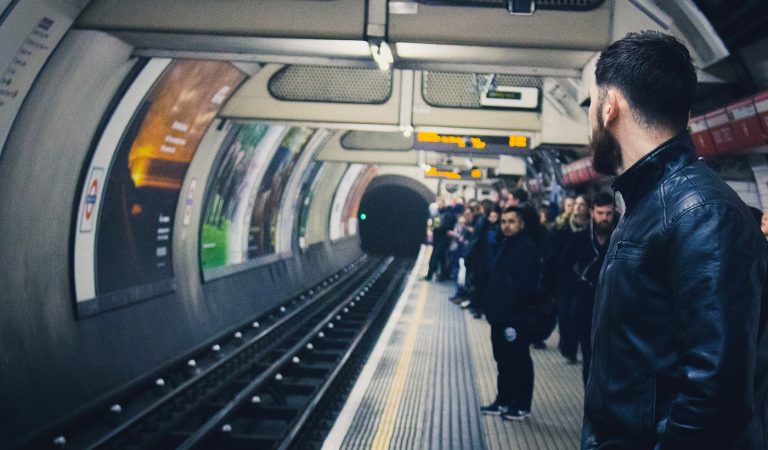
The paradox of city life is that loneliness is worse in densely populated urban areas than non-urban. That is not to accept a fantasised idyll of village life, where loneliness can be just as damaging, but far more people live in cities in the UK, where loneliness is hidden by the crowd, heightened by the contrast of apparently universal social interaction going on around us.
Future resilience is about people and place, not seeing the economy as separate
Resilience must also therefore be framed within an emotional context, which will have a bearing on the success of other health and economic measures. The restructuring of Public Health England here in the UK offers an opportunity to address physical and mental health issues in the round, which could have positive economic as well as social benefits.

Localising responses more is an absolute priority. C19 has clearly exposed the weaknesses of a centralised system and response. A for more aligned, locally integrated and place-based response is needed across health, mental health, social and economic policy. it’s very clear that a siloed approach being the economy as somehow separate from these issues is not going to deliver the response we need, or build local resilience, which ultimately will strengthen global competitiveness.
Cities aren’t going away, but we’ve got to get serious about dealing with deprivation
C19 has hit cities and deprived communities hardest, where mental health was already twice as bad on some measures than non-urban areas. The evidence from ONS and others shows clearly that this is not because of density, but because of deprivation, which is worse in big cities. Any policy response must work in cities and dealing with these underlying issues if it is to work anywhere.
Despite speculation to the contrary, the evidence from history, and from investors and large employers now, tells us that the importance of cities and other urban areas will not reduce as a result of C19, in some ways they may become more important. But the things that people value about them, the way they interact, will want and need to use them has already changed, and cities must respond.
The impacts of C19 – including lockdown, social distancing and a widely-felt desire for a reset of the future economy – all have significant implications for urban design. A re-energising of urban design is required, which will only succeed if it takes a psychologically informed approach to understand shifting behaviours and values.
Developing an urban psychology has never been more important
A growing movement toward an ‘urban psychology’ – understanding the links between person and place – was taking place before C19, and must now be resourced and connected to urban design, adopting the kinds of approaches we saw in the interdisciplinary practice of the Bauhaus for the modern day.
Read the full article here