Building a sense of shared endeavour is critical for cities and citizens
The German Jewish philosopher Hannah Arendt was covered recently on Melvyn Bragg’s ‘In Our Time’. She famously described the ‘banality of evil’ at the Nuremberg trials.
But she also said that active civic life “is the antidote to totalitarianism”. Engaged citizenship, immersed in activity and human contact – something fundamental to our psychological wellbeing – fosters a sense of shared endeavour alongside a lived experience of difference; views, races, lifestyles, cultures.
This is what the American psychologist and urbanist James Hillman meant when he said ‘to find yourself, you must enter the crowd’. That human nature is deeply, innately communal.
Nowhere is this more important than in cities, whose rise fundamentally questions the role of nation states, many of which have failed to address the challenges that give rise to populism and prejudice.
how can we balance individual happiness with the collective good?
Our western version of individualism is relatively new, and there have been massive benefits – individual human rights, services and welfare. But the paradoxical flip side of increased individualism is that we have been taught that every grain of our happiness, comfort, security is sacrosanct and should not be threatened, even if a marginal reduction in these things would create bigger shared benefits. Think climate change and food mountains.
A life lived outside the collective insulates us from difference and populist views can take hold, deflecting our attention from the real problem and refocusing our discontent on the different, imperfect other.
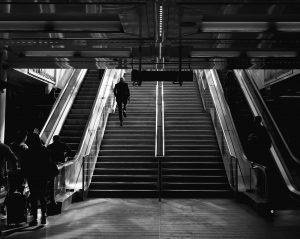
The city provides an interactive social space where complex, multi-layered sets of identities can find coherence and common cause – a better place to live a
better life – resulting perhaps in a ‘shared individuality’.
The city is also an important counterbalance to the nation state, the place where civic participation happens but also a level of state in its own right. Strong cities cannot be easily ignored, even when wrongly cast as the seat of social nightmare and chaos.Cities themselves see right through this.
Living in a city exposes people to difference, helps them develop a greater level of psychological resilience because of this, and although anonymity can be a positive factor of city living, cities also demand a basic level of social and civic participation in order to get by. That’s one of the reasons why globally, cities tend to be more liberal in attitudes and voting patterns. Difference is an everyday thing and tolerant places just feel easier to live in.
In striving for greater social cohesion it is not just ignorance not of the facts that we should be concerned about, but of experience, which in any case shapes how we see the facts. As the economist Ronald Coase said; ‘if you torture data long enough, it will confess to anything’.
Personal experience no matter how small, is a thousand times more powerful than the best propaganda or the biggest statistic, which is perhaps what Hannah Arendt meant.
Blog by Chris Murray